All work
Super Map — Alibaba
Alibaba · Fliggy

Super Map

Overview

Helping travelers plan detailed trips with theme-based map features, visual route planning, and collaborative customization tools.

My Role

User Experience Design Intern at Alibaba — Fliggy.

Duration

June – August, 2023

My Work

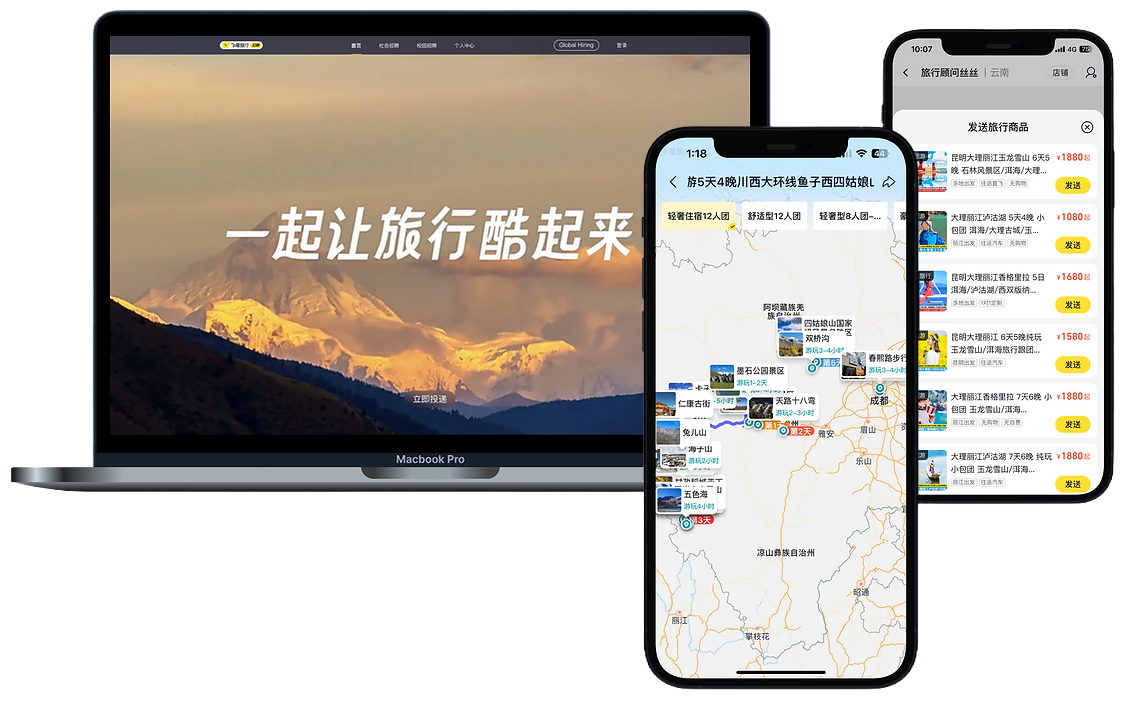
During the summer of 2023, I interned at Alibaba, specifically Fliggy, as a User Experience Design Intern. Fliggy is a leading online travel platform in China. I worked on three projects — a Super Map, a customer-business chatting tool, and the company's career website. This page only demonstrates the Super Map project.


Fliggy

Problem

Unfulfilled User Desires

In the previous version of Fliggy, map features are categorized separately, such as booking hotels, purchasing tickets, and more. However, the maps have varying appearances, and users desire additional map functions. Based on the analysis of PM and UX research teams, users hope the app can assist them more effectively in making informed decisions, saving money, and conserving time. For Fliggy, the more frequent usage of maps helps improve business conversion. I'm in charge of the exploration map.

UX Research Findings

What do users want?

80% of interviewees

Eager to Use Map

80% of the interviewees are willing to use the map feature for information visualization.

80% of interviewees

Favor Collaborative Editing

80% of the interviewees prefer to have a collaborative editing feature in the map.

100% of interviewees

Smart Route Generation

All interviewees have a need for route generation and route editing.

Competitive Analysis

Theme-based vs. Function-based

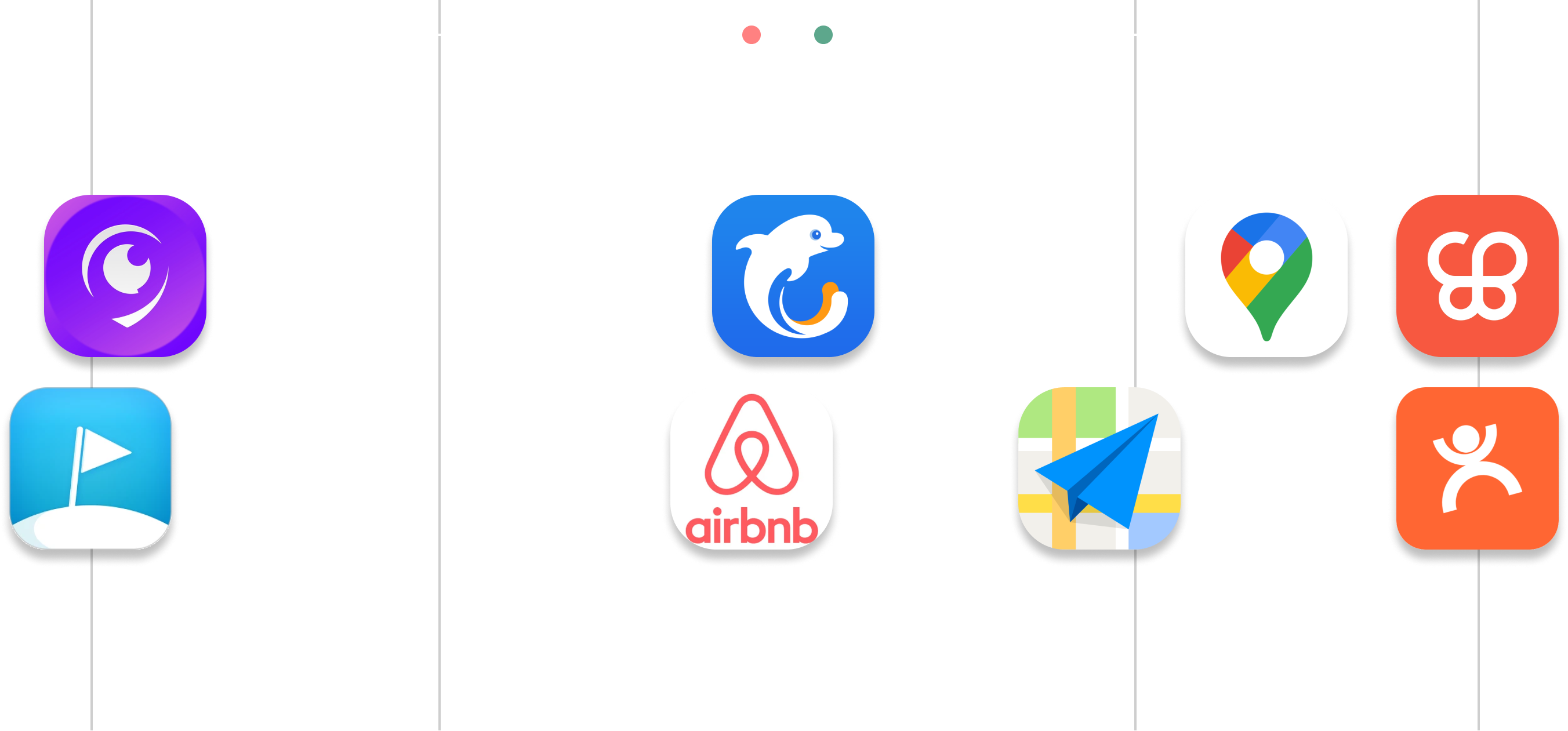
I conducted an in-depth investigation into how map-related and travel-related apps creatively and practically address similar challenges — analyzing the visuals, structures, functions, features, user interactions, and more.

Competitive analysis of map and travel apps

Combining the UX research team's findings, I summarized the pain points.

Time-consuming Map Switching

Inefficient and repetitive to switch between different categories' maps, making the navigation experience less seamless and user-friendly.

Inability to Customize Routes

Users have varied travel preferences — transportation and departure times — but routes can't be customized.

Route Generation Falls Short

Can't generate personalized travel routes based on the POIs users are interested in. The routes are also not visualized on the map.

Insufficient Information for Users

Users need more details about suggested stay length and distances between two POIs.

Brainstorming & Wireframing

Which Style Works Better for Us?

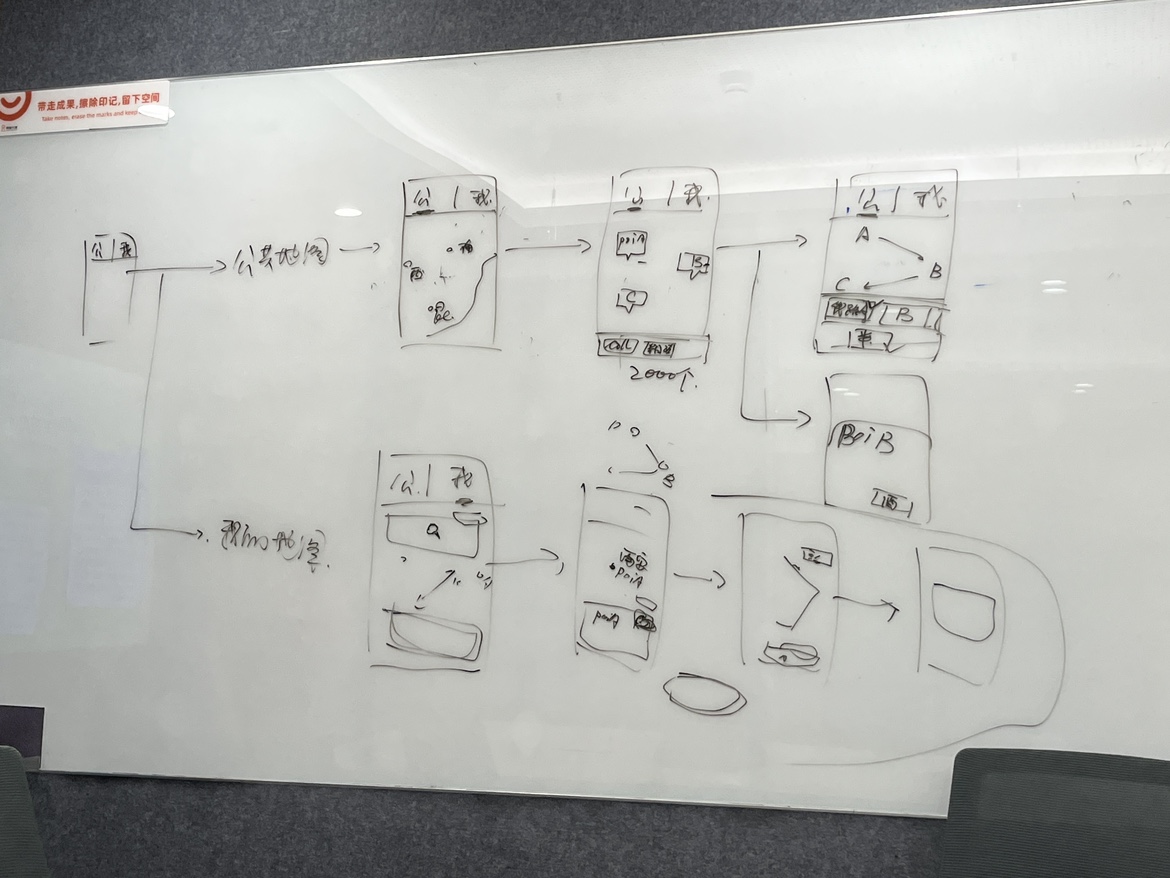
We conducted experiments with both function-based and theme-based designs by brainstorming functions, features, and wireframing, to determine which one is more effective for our specific needs. I was specifically working on the "Super Map," which is a public map.

Brainstorming and wireframing

For the convenience of understanding, I translated the screens into English down below.

Theme-based
Theme-based wireframe
Function-based
Function-based wireframe

Team Evaluation

Theme-based
  • Immersive visual experience
  • Differentiate from our competitors
  • Highly content-dependent
  • Unsolved user demands
Function-based
  • Functions meet users' demands
  • Lack of creativity
  • Distinguishing minutely from competitors
  • Encountering interaction flow hiccups
Theme-based Function-based
Design Concept
A "Super Map" that helps people make more detailed travel plans efficiently and collaboratively, through:
01

Preserving some theme-based features within the map.

02

Emphasizing route visualization and route planning.

03

Allowing travel planning customization and team collaboration.

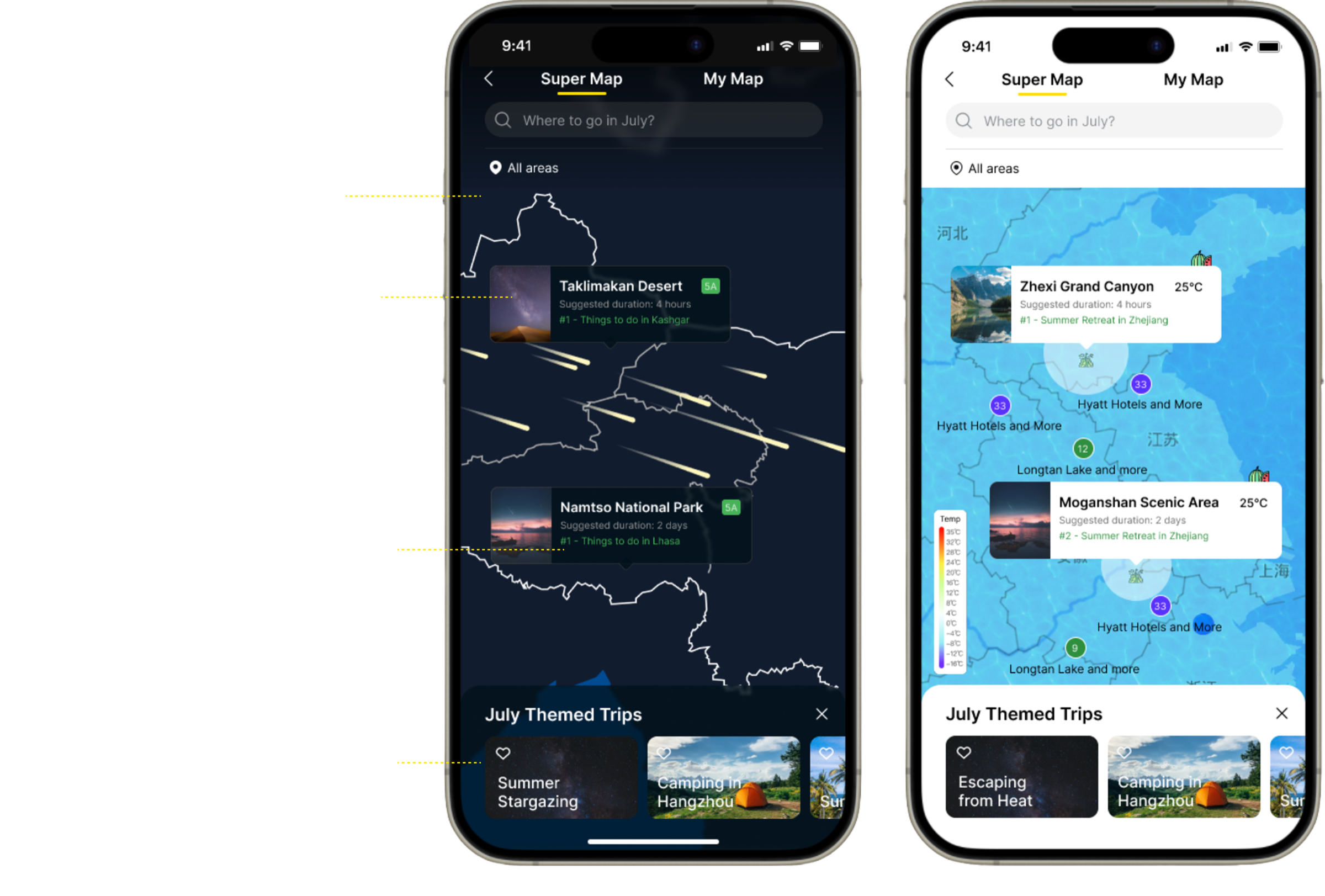
Selected High-Fidelity Prototypes

Functionality with a Creative Edge

After discussions with the entire team and the Product Manager, we confirmed the product direction: emphasizing functionality, but with a smart integration of theme-based creativity.

01

Intelligent Routing

Based on the user's selected destination, the system automatically generates travel routes tailored to their preferences.

02

Increasing Usage and Sales

The generated routes match the travel packages offered by the platform, thereby increasing conversion and sales rates.

03

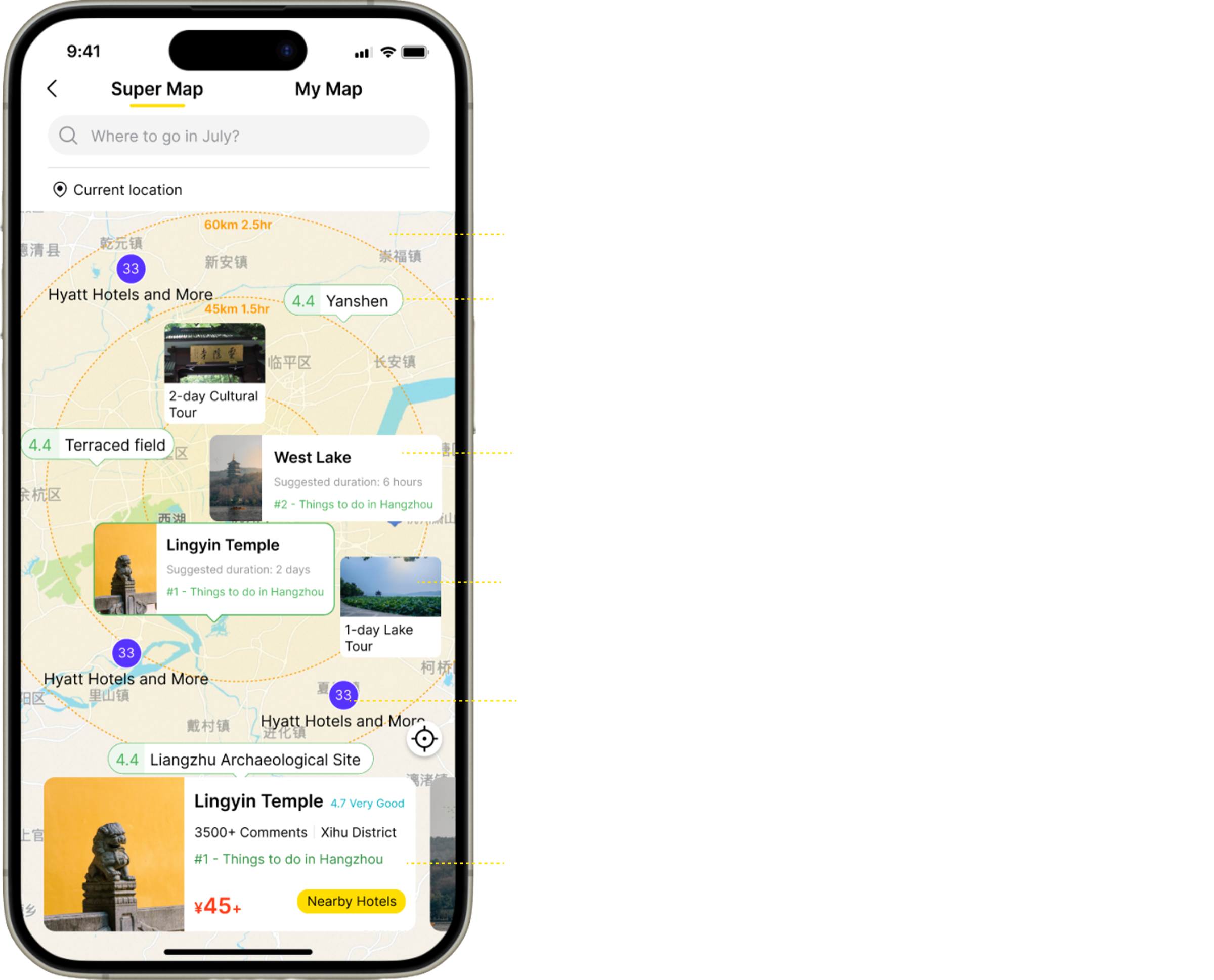
Recommending Nearby POIs

When pinpointing your current location, the system automatically displays cards for nearby POIs. Users can click a card to access more detailed information.

04

Integrating Theme-based Ideas

Various theme tags serve as filters, based on current trends. If camping is trending, clicking "Camping" automatically displays nearby camping locations.

Reflection

Encountering Issues, Looking for Solutions.

This feature is now live and available for exploration. You can download it from the App Store to discover its full functionality.

Challenges I faced
  • Diverse range of functions
  • Complex interaction paths
  • Balance between "theme" and "function"
  • Changes in product requirements from PMs
Lessons I learned
  • Delved into detailed interaction logic and flow
  • Cross-functional collaboration
  • Listened to diverse perspectives and ideas
  • Make design decisions
  • Effective communication for problem solving